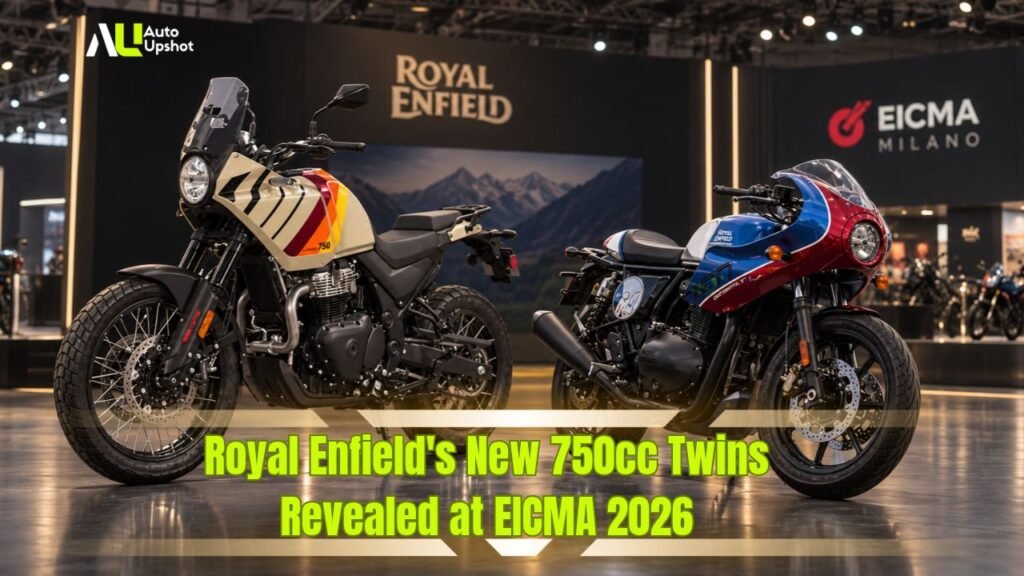

Royal Enfield has made a major statement at EICMA 2026 in Milan, Italy, with the unveiling of two new 750cc motorcycles. The Himalayan 750 and Continental GT 750 mark an important expansion of the brand’s twin-cylinder portfolio, bringing a larger engine platform to its adventure touring and café racer families.
While the Himalayan 750 is designed for long-distance touring and exploring different terrains, the Continental GT 750 takes the familiar café racer formula in a sportier direction. Both motorcycles use Royal Enfield’s new 743cc parallel-twin platform, although each has been developed with a different riding character.
The Himalayan 750 has made its debut with detailed specifications and European prices, while the Continental GT 750 remains more of a showcase for the brand’s next-generation café racer.
Royal Enfield Himalayan 750: A Bigger Adventure Tourer
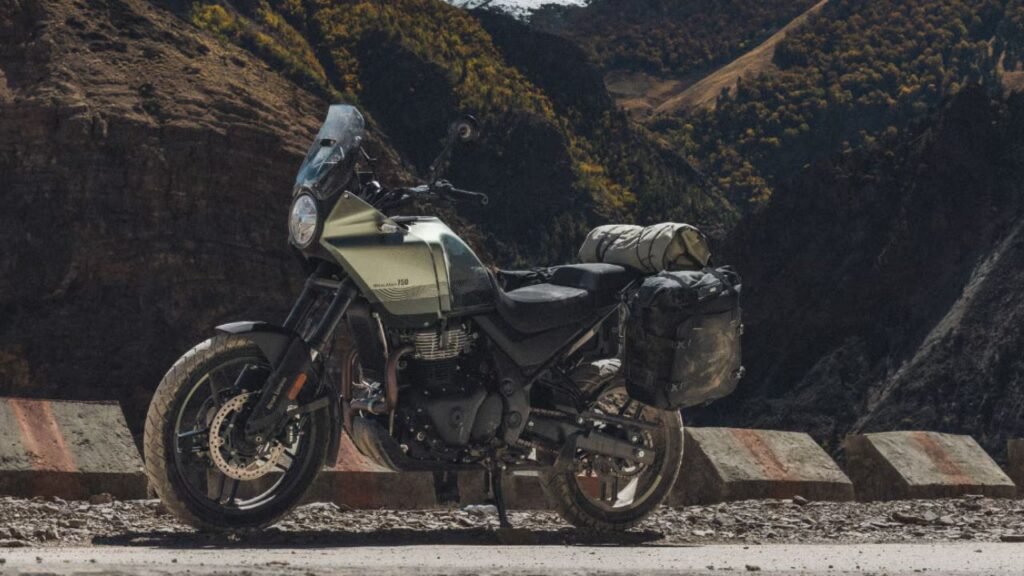
The Himalayan 750 is one of the most significant additions to Royal Enfield’s adventure motorcycle range. It builds on the Himalayan’s decade-long journey, but moves into a higher-capacity category with a twin-cylinder engine and upgraded mechanical components.
Unlike the smaller-capacity Himalayan models, the new 750 is powered by an all-new 743cc, air-oil-cooled, parallel-twin engine. It produces 55 PS at 7,000 rpm and 63 Nm of torque at 5,000 rpm, with 90 per cent of its peak torque available from 3,500 rpm.
The engine is paired with a six-speed gearbox and is designed to deliver strong low and mid-range performance. This should make the motorcycle suitable for highway touring, climbing routes and varied riding conditions.
Himalayan 750 Design and Hardware
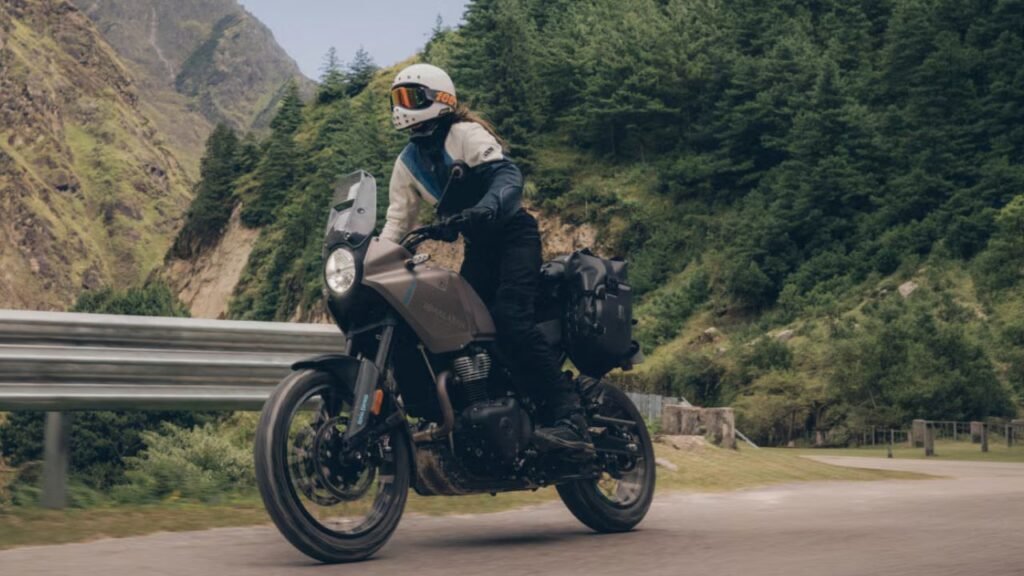
The new Himalayan retains the recognisable adventure motorcycle silhouette, but its overall proportions are more substantial. It gets a large fuel tank, an adjustable windscreen, separate rider and pillion seats and a touring-focused layout.
Royal Enfield has equipped the motorcycle with a 19-inch front and 17-inch rear wheel setup. Buyers can choose between cast-alloy and spoked-wheel options, both designed for tubeless tyres.
Suspension duties are handled by a 43mm Showa upside-down front fork with preload, compression and rebound adjustment. It offers 190mm of travel. At the rear, the motorcycle gets a linkage-type Showa monoshock with adjustable preload and rebound, providing 175mm of wheel travel.
Braking hardware includes twin 280mm front discs and a 255mm rear disc. The braking system is supported by dual-channel ABS, which can be switched off at the rear, along with cornering ABS and lean-sensitive traction control.
With 205mm of ground clearance and an 815mm seat height, the Himalayan 750 is designed to handle a mix of highway journeys and challenging surfaces. Its kerb weight is 224kg for the India-spec model, while the fuel tank has a capacity of 17.8 litres.
Features and Rider Technology
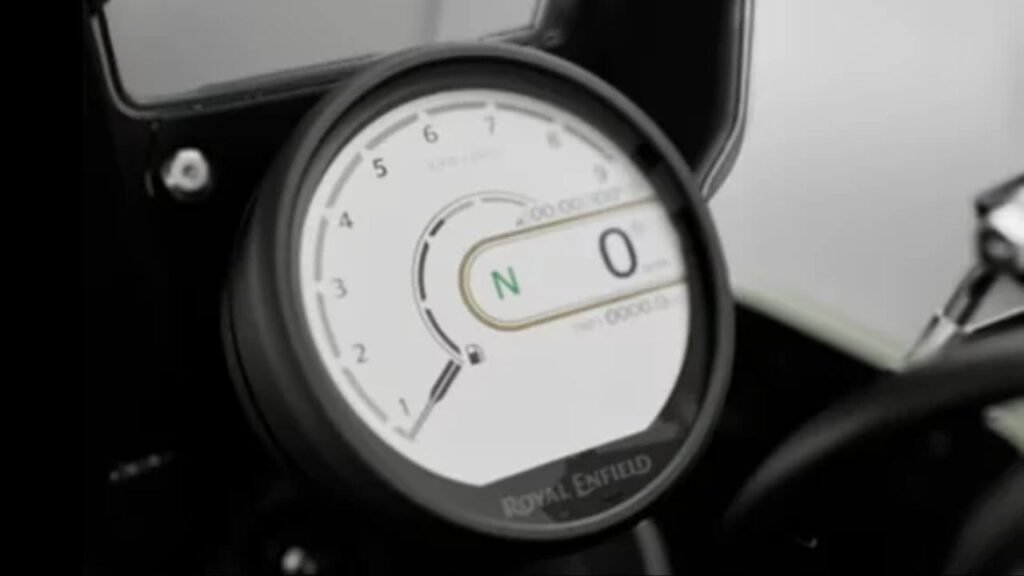
The Himalayan 750 also receives a substantial electronics package. It features a circular 4-inch TFT instrument display with Google Maps navigation, Bluetooth connectivity and phone and music controls.
The motorcycle offers five riding modes: Road, Road Sport, Rain, Trail and Custom. These modes adjust engine mapping and the intervention levels of the ABS and traction control systems.
Other notable features include:
- Six-axis IMU
- Cornering ABS
- Lean-sensitive traction control
- Cruise control
- Tyre Pressure Monitoring System
- Self-cancelling turn indicators
- Emergency brake light
- Dual USB Type-C charging ports
- LED headlamp
The combination of touring equipment and electronic rider aids makes the Himalayan 750 Royal Enfield’s most technology-rich adventure motorcycle so far.
Colours and Touring Package
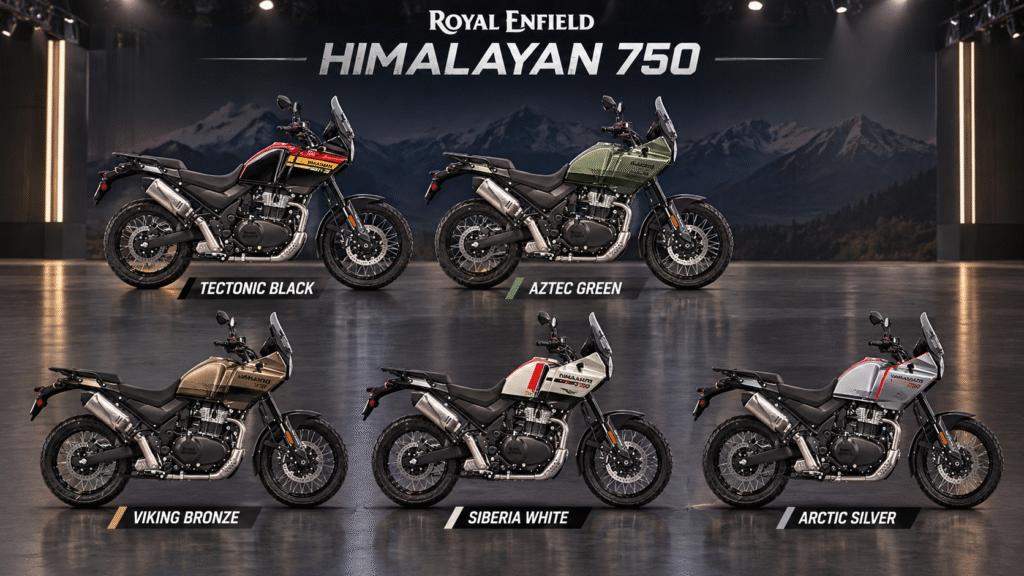
Royal Enfield will offer the Himalayan 750 in five colour options: Antarctic Silver, Siberia White, Aztec Green, Viking Bronze and Tectonic Black.
The Antarctic Silver version gets a dedicated touring package developed in collaboration with GIVI. It includes a top box, hard panniers, heated grips, handguards and an aluminium skid plate.
Royal Enfield Himalayan 750 Specifications
| Specification | Details |
|---|---|
| Engine | 743cc, air-oil-cooled, parallel-twin |
| Maximum Power | 55 PS at 7,000 rpm |
| Maximum Torque | 63 Nm at 5,000 rpm |
| Gearbox | 6-speed |
| Frame | Box-section spine frame |
| Front Suspension | 43mm Showa USD fork |
| Front Suspension Travel | 190mm |
| Rear Suspension | Showa linkage-type monoshock |
| Rear Suspension Travel | 175mm |
| Front Brake | Twin 280mm discs |
| Rear Brake | 255mm disc |
| ABS | Dual-channel, rear switchable |
| Rider Aids | Cornering ABS, lean-sensitive traction control |
| Front Wheel | 19-inch |
| Rear Wheel | 17-inch |
| Seat Height | 815mm |
| Ground Clearance | 205mm |
| Fuel Tank | 17.8 litres |
| Kerb Weight | 224kg |
| Riding Modes | Road, Road Sport, Rain, Trail, Custom |
| Instrument Cluster | 4-inch circular TFT |
Royal Enfield Continental GT 750: A Sportier Café Racer
Alongside the Himalayan, Royal Enfield also showcased the Continental GT 750, taking its popular café racer family into the 750cc segment.
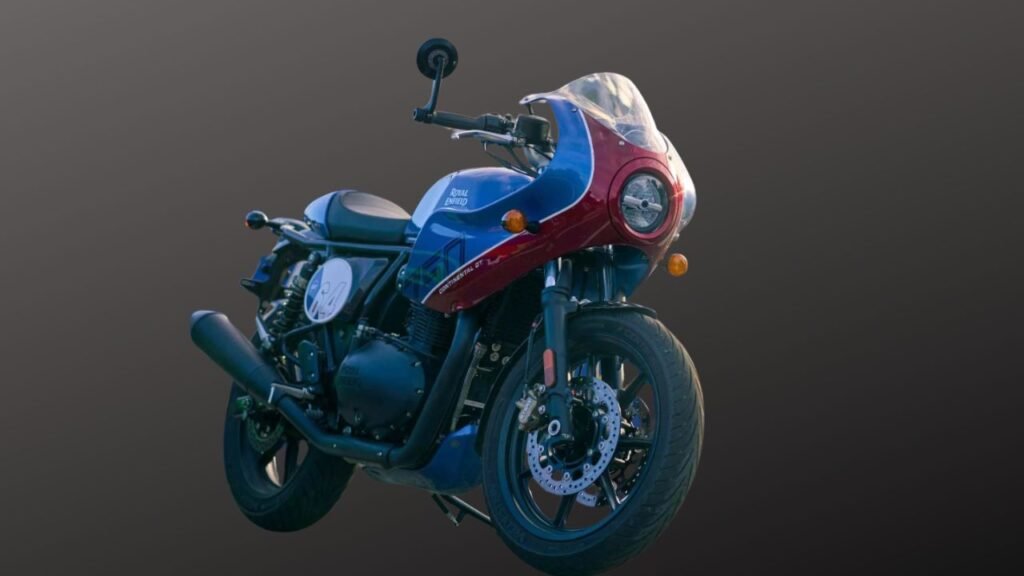
The new motorcycle retains the distinctive Continental GT design language but introduces sharper styling and a more performance-focused appearance. It is powered by an uprated version of the new 743cc parallel-twin engine used in the Himalayan 750.
Royal Enfield describes the Continental GT 750 as its highest-performance production motorcycle to date. However, the company has not yet announced its final power and torque figures.
Two Versions: Faired and Unfaired
One of the biggest highlights of the Continental GT 750 is the availability of two distinct body styles.
The unfaired version stays closer to the traditional Continental GT silhouette, with a cleaner front profile and a more relaxed riding position.
The faired version gets additional front bodywork and a lower handlebar position, creating a more committed riding posture. This version has a stronger retro-racing character and is aimed at riders who prefer a sportier café racer experience.
Both versions retain the core identity of the Continental GT while offering different visual and riding characteristics.
Engine and Mechanical Updates
The Continental GT 750 uses the new 743cc parallel-twin engine in an uprated state of tune. Although the final output figures have not been revealed, the larger engine is expected to give the motorcycle a stronger performance character compared with the existing Continental GT 650.
The motorcycle also gets twin exhaust pipes, giving it a different exhaust arrangement from the Himalayan 750’s 2-into-1 setup.
Royal Enfield has not yet published complete details of the Continental GT 750’s suspension, braking system, dimensions or kerb weight. These specifications will be important in understanding how extensively the motorcycle differs from the current GT 650.
Updated Instrument Cluster and Colours
The Continental GT 750 gets a hybrid twin-pod instrument cluster that combines its traditional analogue-inspired layout with a TFT display. This allows Royal Enfield to retain the classic café racer character while introducing modern instrumentation.
At EICMA 2026, the motorcycle was showcased in three colour options:
- Red Line
- TT Blue
- Master Clean
The different colour and bodywork combinations further distinguish the two versions of the new Continental GT.
Royal Enfield Continental GT 750: Known Details
| Specification | Details |
|---|---|
| Engine | 743cc parallel-twin, uprated version |
| Power | Not announced |
| Torque | Not announced |
| Gearbox | Final details not announced |
| Variants | Faired and unfaired |
| Instrument Cluster | Hybrid twin-pod TFT |
| Exhaust | Twin exhaust pipes |
| Colours | Red Line, TT Blue, Master Clean |
Complete technical specifications have not yet been officially announced by Royal Enfield.
Himalayan 750 and Continental GT 750: European Pricing
Royal Enfield has announced introductory European prices for the Himalayan 750.
In the UK, the cast-wheel version starts at £6,999, while the spoked-wheel version costs £7,299. The fully equipped Antarctic Silver touring version is priced at £8,699.
For Italy, prices start at €7,390 for the cast-wheel version, €7,790 for the spoked-wheel version and €9,290 for the flagship touring package.
The Continental GT 750’s pricing has not been announced yet. Royal Enfield has also not confirmed its India launch date or pricing.
What This Means for Royal Enfield’s 750cc Line-up
The Himalayan 750 and Continental GT 750 represent two different directions for Royal Enfield’s new twin-cylinder platform.
The Himalayan focuses on touring capability, long-distance comfort and improved electronics, while the Continental GT 750 builds on the brand’s café racer identity with a sportier design and an uprated engine.
For the Indian market, the Himalayan 750 is particularly significant as it brings a larger and more powerful adventure touring option to the brand’s portfolio. The Continental GT 750, meanwhile, could attract riders looking for a more powerful evolution of the existing GT platform.
With both motorcycles making their EICMA 2026 appearance, Royal Enfield has given a clear indication of how it plans to expand its presence in the middleweight motorcycle segment.