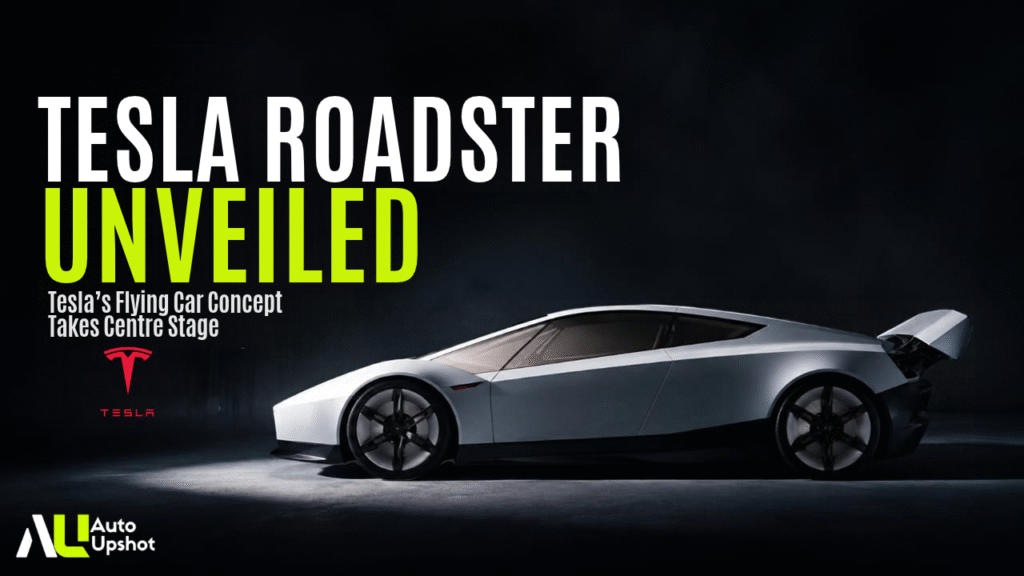

Tesla has brought the long awaited second generation Roadster back into the spotlight with a demonstration that goes beyond conventional electric car performance. The Tesla Roadster flying car concept became a major talking point after the prototype was shown performing brief airborne manoeuvres using rocket style thrusters developed in collaboration with SpaceX.
The demonstration took place in Texas on October 15, 2026, nearly nine years after Tesla first unveiled the next generation Roadster in November 2017. The latest reveal showcased a combination of high performance electric vehicle engineering, specialised thrusters and a suction system designed to help the car perform unusual manoeuvres.
While the demonstration has attracted attention from automotive enthusiasts worldwide, several important questions remain about the production model, its final specifications and the practical use of its airborne capabilities.
Tesla Roadster Flying Car Demonstration: What Happened?
Tesla demonstrated the redesigned Roadster at an event near SpaceX’s testing facility in Texas. The prototype performed a series of dramatic manoeuvres, including driving along an inverted ramp, briefly lifting into the air, rotating and returning to the ground.
The demonstration highlighted the technology behind Tesla’s ambitious performance claims. Rather than functioning like a conventional aircraft, the Roadster uses specialised hardware to achieve brief airborne movements.
Tesla CEO Elon Musk has previously discussed the possibility of incorporating SpaceX inspired thrusters into the Roadster. The latest demonstration provides a public look at how this concept could work in practice.
However, the vehicle shown remains a prototype, and the demonstration alone does not establish that every advertised capability will be available on the final production car.
How Does the Tesla Roadster Fly?
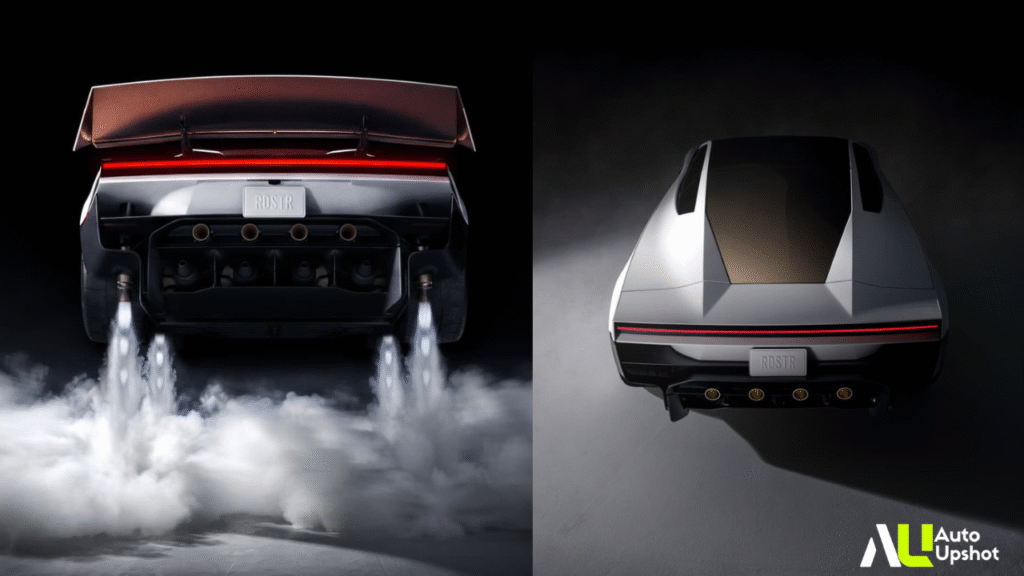
One of the most interesting aspects of the new Roadster is its thruster system, developed with SpaceX technology.
According to reporting by TechCrunch, Tesla demonstrated a configuration involving multiple cold gas thrusters connected to a high pressure compressed air system. These thrusters can generate thrust to help the prototype lift and manoeuvre briefly in the air.
The vehicle also demonstrated a suction system that allowed it to travel along an inverted ramp. This feature adds another unusual dimension to the Roadster’s performance demonstration.
It is important to understand that cold gas thrusters are not the same as conventional jet engines. They generate thrust by releasing pressurised gas, rather than burning fuel in a combustion chamber.
Although the technology makes the Roadster look like a flying car, it is not equivalent to a conventional aircraft. Tesla has not established that the vehicle can sustain flight, travel long distances through the air or operate as an everyday flying vehicle.
Tesla Roadster Performance and Expected Specifications
Tesla has positioned the Roadster as a high performance electric sports car, with the latest demonstration placing considerable emphasis on acceleration and advanced engineering.
During the event, the prototype was shown accelerating from zero to 60 mph in approximately one second. A subsequent demonstration reportedly reached the same speed in around 0.8 seconds, according to Car and Driver’s coverage of the reveal.
These figures are extraordinary, but they should be treated as claims demonstrated or reported for the prototype rather than independently verified production specifications.
Tesla has also discussed a top speed exceeding 230 mph. The final performance figures, however, will need to be confirmed for the production version.
The following table summarises the key details currently reported.
| Feature | Current information |
|---|---|
| Vehicle | Second generation Tesla Roadster |
| Powertrain | All electric |
| Special technology | SpaceX inspired cold gas thrusters |
| Airborne capability | Brief airborne manoeuvres demonstrated |
| Acceleration | Approximately 0.8 to 1 second from zero to 60 mph claimed during the demonstration |
| Claimed top speed | More than 230 mph |
| Expected production | 2028 |
| Final production price | Not announced |
These details are based on reporting available following the October 2026 demonstration. Specifications and features may change before production begins.
Tesla Roadster Launch Timeline and Expected Price
The second generation Tesla Roadster was first unveiled in November 2017. Since then, the project has faced repeated delays, leaving enthusiasts waiting for a production ready version of the electric sports car.
At the October 2026 event, Tesla indicated that production is planned to begin in 2028. This is the company’s stated target, rather than confirmation that customer deliveries will definitely start in that year.
Tesla has not announced a final production price at the time of writing. Reports following the reveal also indicate that the company has not provided a complete set of final production specifications.
The Roadster’s eventual price and availability will be important factors in determining how accessible the vehicle is to buyers. Its specialised thruster technology could also affect which configurations reach customers and how they are approved for use.
Will the Tesla Roadster Be a Real Flying Car?
The idea of a Tesla Roadster flying car has captured attention because it combines the familiar shape of a sports car with technology associated with rockets.
However, there is an important distinction between briefly lifting a vehicle into the air and developing a practical flying car.
The Roadster’s demonstration showed that its specialised system could perform short airborne manoeuvres in a controlled environment. It did not establish that the vehicle can take off and land like an aircraft, sustain flight or navigate through ordinary airspace.
There are also regulatory considerations. Reporting by the Associated Press noted that the Roadster’s airborne features are not approved for public road use. The legality of such technology will depend on the final vehicle configuration and the regulations applicable in each jurisdiction.
For now, the Roadster is best understood as an ambitious electric sports car featuring experimental airborne capabilities, rather than a replacement for conventional road vehicles or aircraft.
What Makes the New Tesla Roadster Important?
The Roadster has always occupied a special place in Tesla’s product lineup. The original model helped establish the company’s identity as an electric vehicle manufacturer capable of building a performance focused sports car.
The second generation model takes that idea considerably further by combining electric performance with technology inspired by SpaceX.
Its latest demonstration also highlights Tesla’s approach to attracting attention through ambitious engineering. Beyond acceleration and top speed, the Roadster is intended to showcase capabilities that are rarely associated with production cars.
Whether those features translate into a practical production vehicle remains to be seen. The upcoming development period will need to establish the final specifications, safety requirements, pricing and availability.
Tesla Roadster Flying Car Technology Pushes Automotive Engineering Further
The Tesla Roadster flying car demonstration marks a significant moment for one of the automotive industry’s most delayed and closely watched projects. By showcasing brief airborne manoeuvres using SpaceX inspired thrusters, Tesla has demonstrated an unusual approach to high performance electric vehicle engineering.
However, the prototype’s dramatic capabilities should not be confused with a fully developed flying car. Production is currently targeted for 2028, and important details about the final vehicle remain unconfirmed.
For automotive enthusiasts, the next stage will be watching whether Tesla can turn this ambitious demonstration into a production ready sports car. Until the company confirms the final specifications and practical limitations, the Roadster remains a fascinating glimpse of what experimental automotive technology might achieve.